
Google CEO Warns Staff: Underinvestment is the Biggest AI Mistake
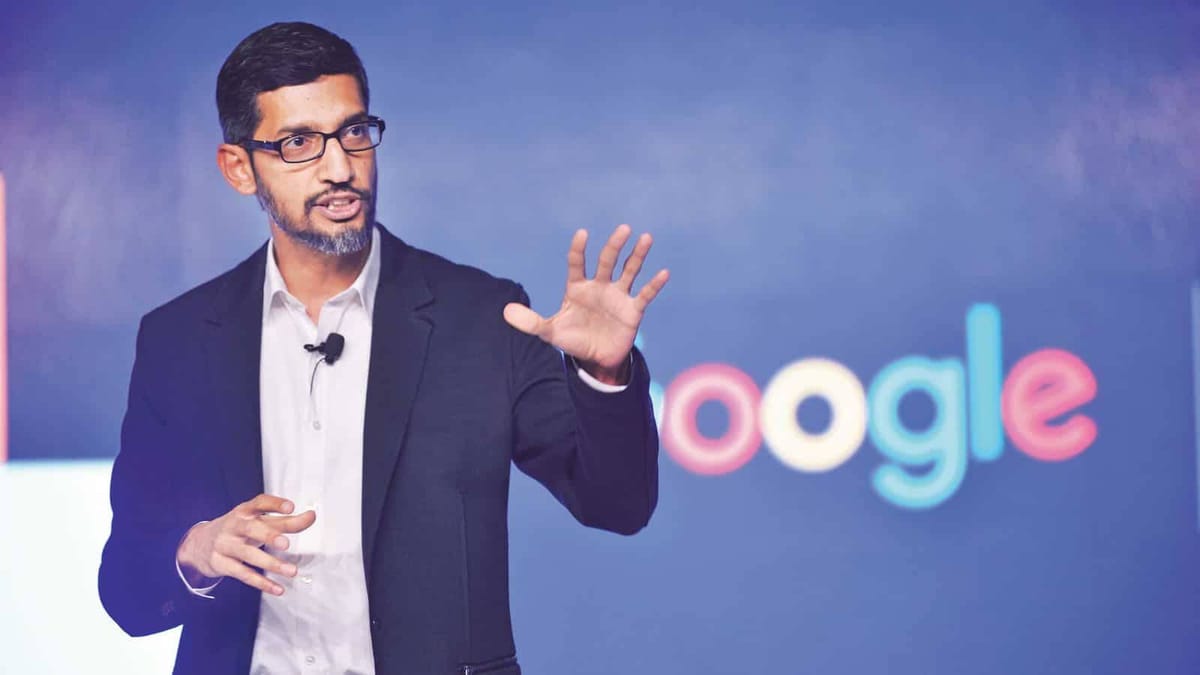
In an environment where every week brings fresh warnings about an AI investment bubble, Google CEO Sundar Pichai is doubling down on a counter-intuitive, high-stakes philosophy: the risk of underinvesting is greater than the risk of overinvesting.
Speaking in a recent all-hands meeting, Pichai did not mince words about the competitive pressure, telling employees: "The risk of underinvesting [in AI] is pretty high."
The Core of the Calculus
Pichai's statement acknowledges the volatile market (he previously admitted to seeing "elements of irrationality") but reframes the AI race as an existential threat to Google's long-term dominance. His logic is supported by evidence right within Google's own balance sheet:
- Lost Revenue: Pichai cited Google Cloud's stellar performance but pointed out the growth "would have been much better if we had more compute." This confirms that even Google is currently constrained by its own infrastructure, losing potential revenue because it simply cannot deploy enough computing power fast enough to meet customer demand for AI services.
- The Competition: The fierce pace set by rivals like OpenAI and Microsoft means any delay in building out infrastructure translates directly to ceded market share and a weakened competitive position. Internal reports suggest Google is under pressure to double its AI serving capacity every six months, illustrating the breakneck, non-negotiable pace of this arms race.
- Long-Term Vision: Pichai sees AI as the most profound technology of our time, comparable to the internet. While the dot-com era had excess investment, no one questions the internet’s ultimate importance. For Google, securing a dominant position in AI requires a massive, sustained capital expenditure, even if the short-term financial returns are uneven.
For Google, holding back now means losing the next decade. Pichai's warning is a clear mandate to the entire organization: caution is the riskiest strategy. The company is prepared to absorb short-term market turbulence to secure its future.
The question for us, the audience, is now: Which is the greater mistake in this race: To overspend and risk a correction, or to underinvest and risk falling behind permanently?
Comments ()