
Inside Tesla Cybertruck's Early Recalls and OTA Fixes
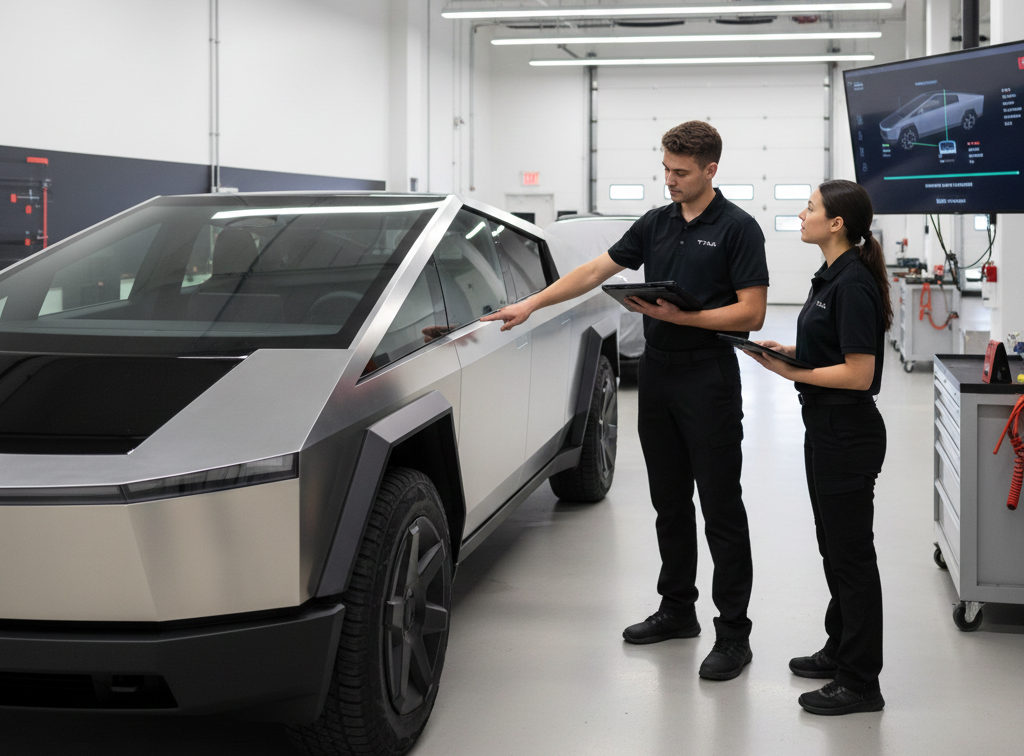
The Tesla Cybertruck was never going to have a conventional launch. From its polarizing design to its groundbreaking manufacturing process, it was destined to defy expectations and perhaps, invite a few early adjustments. Now, following its highly anticipated initial rollout, the Cybertruck is undergoing several smaller, targeted recalls and receiving a flurry of Over-the-Air (OTA) software updates.
While recalls are a standard part of any new vehicle launch, the Cybertruck's unique construction and unparalleled public visibility ensure that every single adjustment generates significant headlines. This transparency, coupled with Tesla's rapid OTA update capability, highlights a maintenance approach as distinctive as the truck itself.
The Nature of the Recalls: Minor Structural & Software Alignment
The current recalls for the Cybertruck appear to be primarily related to:
- Minor Structural Alignments: These are often small fit-and-finish issues or component alignments that emerge once thousands of vehicles are on the road under diverse conditions. Given the Cybertruck's exoskeleton design and novel manufacturing techniques, some initial adjustments are not entirely unexpected.
- Software Calibration & Sensor Issues: Modern vehicles are rolling computers, and the Cybertruck is no exception. Non-critical sensor calibration problems (e.g., relating to advanced driver-assistance systems, parking sensors) are being addressed through rapid OTA software updates. This allows Tesla to push fixes directly to the vehicle's onboard computer, often before owners even notice an issue, avoiding the need for a physical service center visit for minor glitches.
Why It's Trending: The Cybertruck Effect
Every new vehicle experiences some level of early adjustment, but for the Cybertruck, the stakes are higher:
- High Public Visibility: The Cybertruck is arguably the most talked-about vehicle of the decade. Every minor detail, every early owner experience, is amplified across social media and news outlets.
- Manufacturing Complexity: Its stainless-steel exoskeleton and innovative assembly lines represent a departure from traditional automotive manufacturing, making any early-production kinks particularly scrutinized.
- Tesla's OTA Advantage: While other manufacturers also use OTA updates, Tesla has pioneered and perfected their use for both feature enhancements and critical fixes, often mitigating the need for traditional dealership visits for many issues. This demonstrates a proactive, software-centric approach to quality control.
These early adjustments are part of the learning curve for any revolutionary product. For Cybertruck owners, the proactive OTA updates aim to offer peace of mind, demonstrating that even a vehicle this unique can be iteratively improved and refined at a pace unmatched by traditional automotive players.
Comments ()