
The Return of the Prodigal Chip: Is Apple Betting on Intel's Comeback for M-Series Silicon?
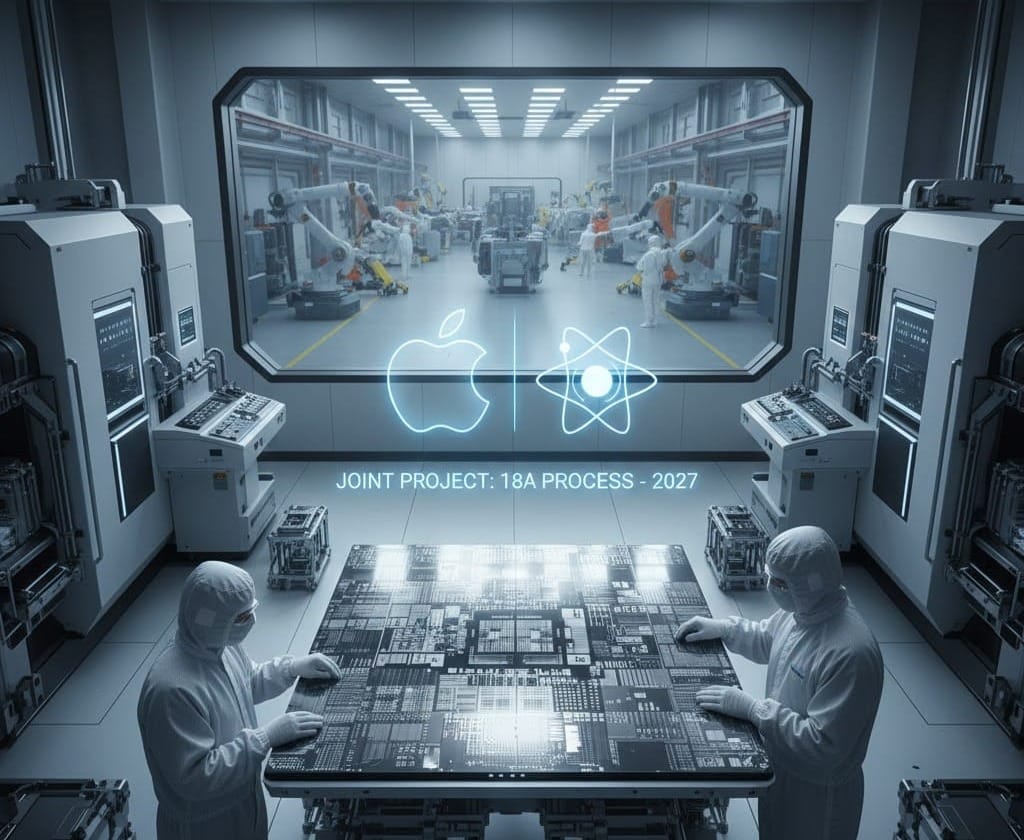
Just a few years ago, Apple famously severed ties with Intel, announcing a definitive transition to its custom-designed M-series silicon for all Macs. It was hailed as a new era for Apple and a significant blow to Intel. Now, a bombshell report from the highly respected analyst Ming-Chi Kuo suggests that history might be on the verge of a stunning reversal.
According to Kuo, Intel may begin supplying a portion of Apple's lowest-end M-series chips as early as 2027, specifically leveraging Intel's advanced 18A process technology.
A Strategic Alliance Reborn: Why Now?
This rumored partnership, if it materializes, carries immense implications for both companies and the entire semiconductor industry:
- Apple's Supply Diversification: Apple is notoriously sensitive about supply chain resilience. Currently, its custom silicon is almost entirely dependent on TSMC. Bringing Intel into the fold, even for lower-end chips, would significantly de-risk Apple's manufacturing strategy, giving it more leverage and redundancy.
- Intel's Foundry Comeback: Intel has invested billions in its new foundry services (Intel Foundry) and aggressive process roadmaps, with 18A being its cutting-edge technology. Securing even a partial order from a client as prestigious and demanding as Apple would be a massive validation of Intel's manufacturing prowess and a crucial step in its long-awaited comeback as a leading-edge foundry.
- The "Lowest-End" Strategy: Focusing on lower-end M-series chips (like those used in base model MacBooks Air or entry-level iMacs) allows both companies to test the waters. Apple can assess Intel's 18A process without jeopardizing its most critical, high-performance chip production, while Intel gains a marquee customer for its new node.
Bargaining Chip or Genuine Belief?
The news raises the ultimate question: Is this a sign that Intel's advanced manufacturing comeback is real, and Apple genuinely sees them as a viable, high-quality partner? Or is Apple simply using Intel as a bargaining chip to extract better terms or ensure more capacity from its primary foundry partner, TSMC?
Regardless of the underlying motive, this rumor underscores the hyper-competitive nature of the chip industry. Every major tech player is fighting for advanced silicon, and Intel's potential return to the Apple ecosystem signals a potential reordering of power dynamics in the semiconductor world.
Comments ()