
The Wrist-Mounted PC: MSI’s Concept Challenges the Limits of Gaming Portability
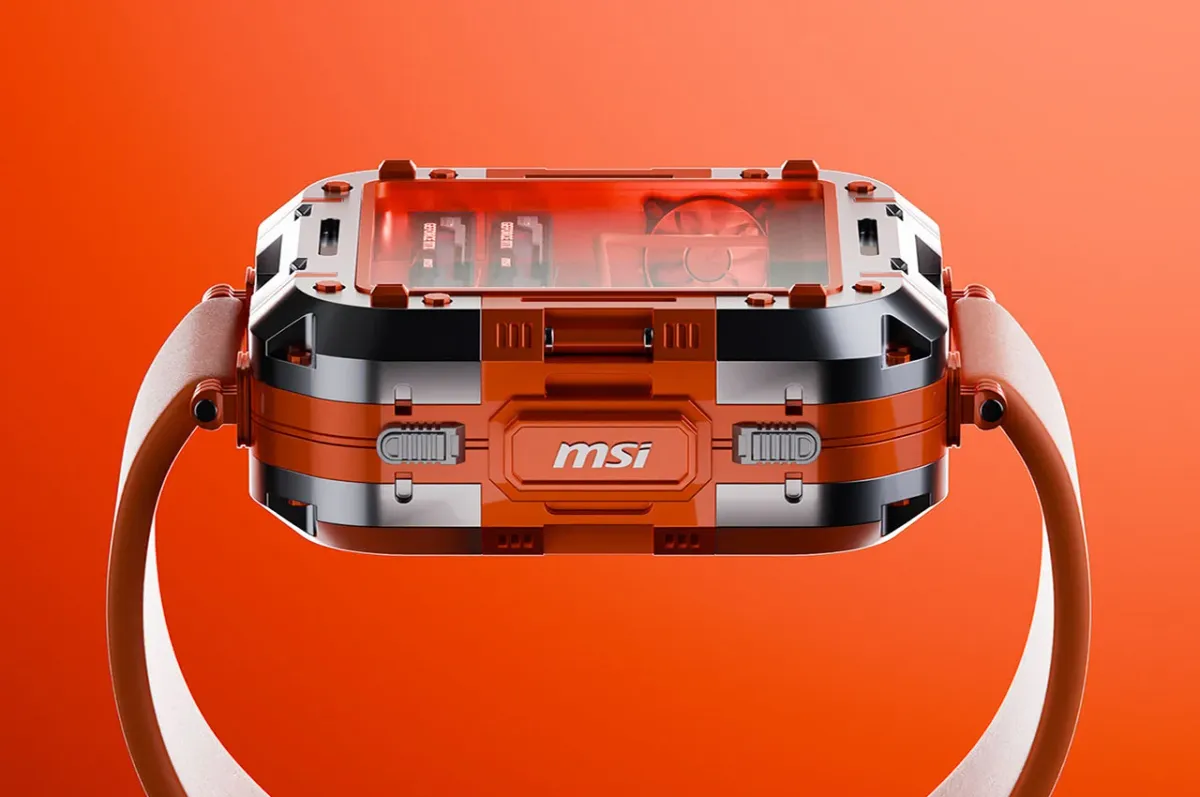
The dream of strapping a genuine computer to your wrist—a piece of wearable technology with real, desktop-class capability—has long been confined to science fiction. Now, MSI is boldly stepping into that territory with its conceptual Gaming PC Watch.
This isn't just a smartwatch running a gaming app; it's a miniaturized showcase of high-end internal components, designed to bring "immediate access to computing capability" right to your arm. The mere existence of this concept signals a fascinating shift: the relentless pursuit of PC miniaturization may finally be hitting the human body.
The Vision: Industrial Power on Your Pulse
The concept, initially visualized by designer Eslam Mhd and backed by MSI's component expertise, aims to fuse the industrial, exposed aesthetic of a high-end gaming PC rig with the compact form factor of a wristwatch.
Instead of hiding the tech, the design proudly showcases the miniaturized graphics card, cooling pipes, and circuit architecture—a dragon-themed, rugged, and aggressive nod to MSI's gaming heritage. The idea is to turn the wearable into a piece of functional, high-performance jewelry for the dedicated PC enthusiast.
The Inevitable Obstacles: Heat, Battery, and Ergonomics
While the concept is undeniably cool, transforming it into a viable product reveals three monumental challenges:
- Thermal Management (Heat): The number one hurdle. Even low-power PC components generate significant heat. Cramming a processor and miniaturized GPU into a wrist-mounted chassis—in constant contact with the skin—creates a thermal nightmare. Without a radical breakthrough in passive or active cooling that is both silent and small, the device would risk overheating itself or, worse, causing discomfort or burns to the user.
- Power Density (Battery Life): High-performance computing demands massive power. The small lithium batteries required for a watch form factor simply do not have the energy density to power a true PC for more than a handful of minutes under heavy load. The user would likely need a bulky external power pack, defeating the purpose of an all-in-one wrist device.
- Ergonomics & Usability: A device with exposed components and significant weight is an ergonomic challenge. Moreover, a wrist-mounted PC requires peripherals. How do you interface with a device that runs a desktop OS? You would still need a separate screen, keyboard, and mouse, reducing the "immediate access" utility unless it is designed solely for quick, specific tasks.
A True Concept, Not a Near-Term Product
The MSI Gaming PC Watch is best viewed not as a product slated for next year, but as a design exercise—a statement about the boundaries of miniaturization and the strength of the brand's identity.
It succeeds by sparking conversation and proving that MSI can envision a future where even the most complex computing is, conceptually, always within reach. The technology is likely years away from solving the fundamental problems of heat and power, but the journey to the wrist-PC is fascinating nonetheless.
Would you wear a PC on your wrist if it meant carrying a backpack battery?
Comments ()